Worldray
Premium audio · Curated · 2026

Sound that
moves the room.

Worldray is a guide to high-end audio and home cinema — hand-picked gear, calibration playbooks, and setups that hit the way they were intended.

Audiophile · Cinema · Atmos · Gaming · Calibrated
01 / Featured Setups

Three rooms.
One obsession.

Real builds, fully spec'd — from the receiver to the cable gauge to the chair. Each setup links to the gear that earned its place.

02 / The Picks · April 2026

Tested.
Then chosen.

A short list, not a catalog. Every product earned its place in a real room, against real alternatives, at the price it actually costs.

As an Amazon Associate, Worldray earns from qualifying purchases.

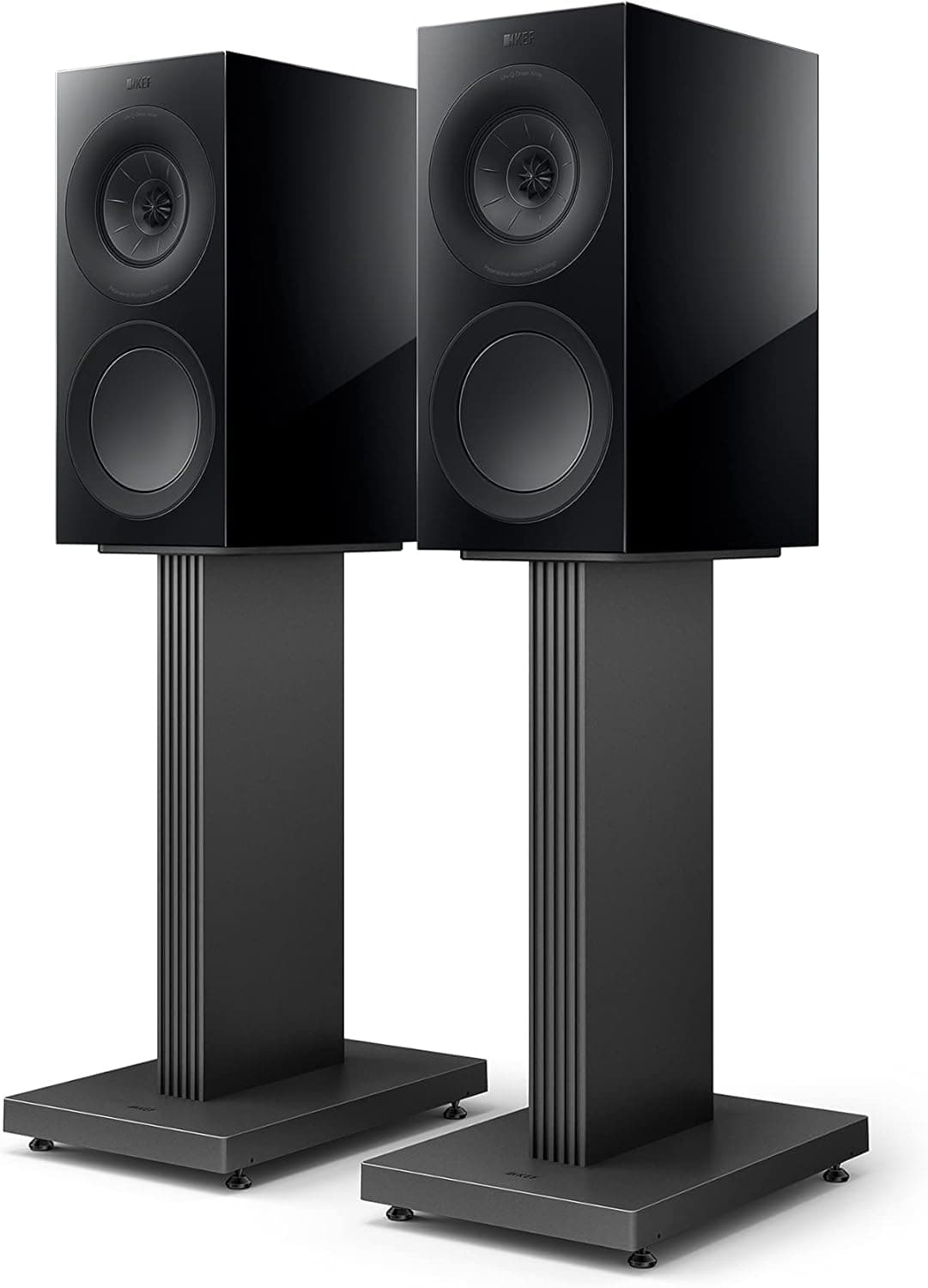
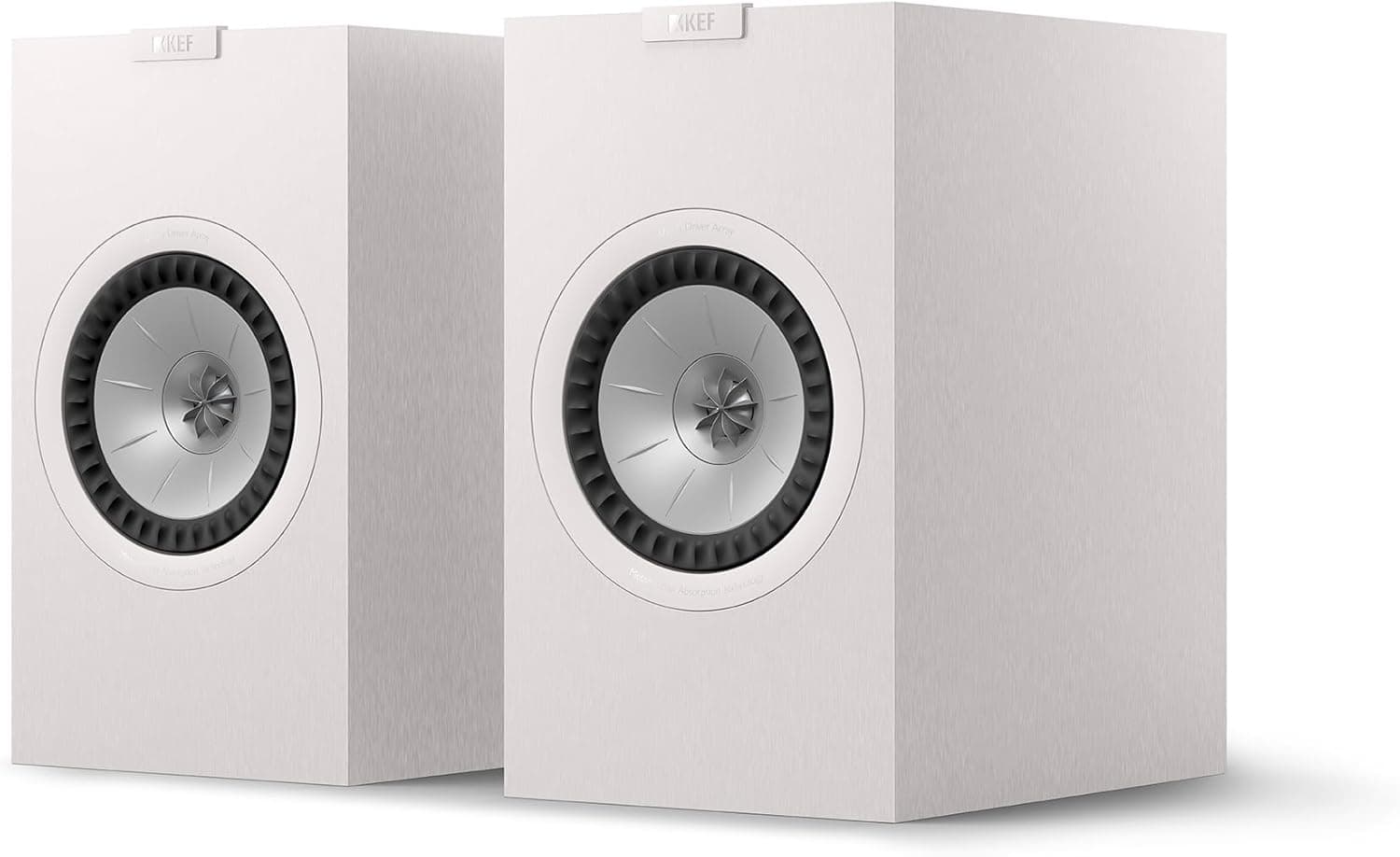
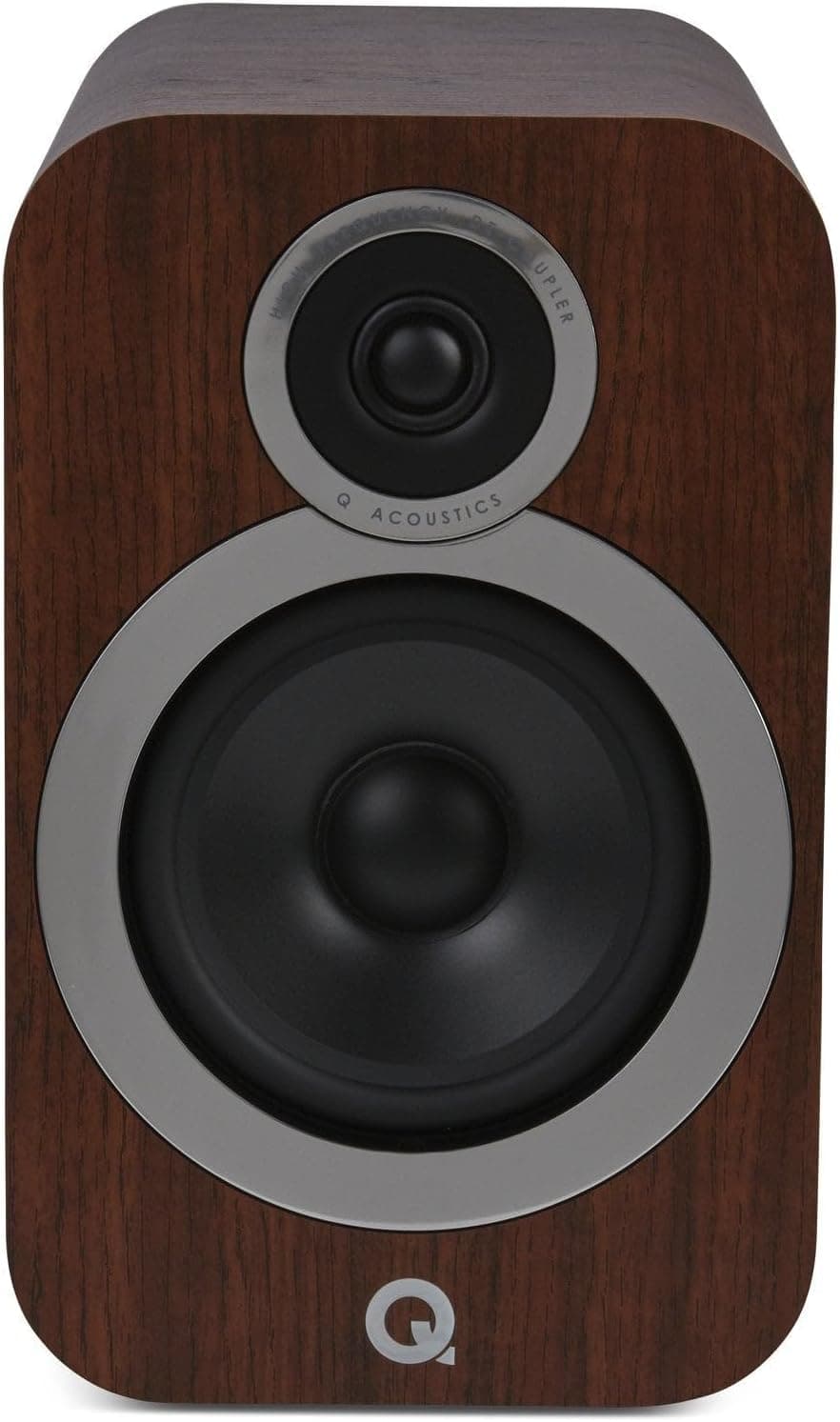
KEF Q3 Meta bookshelf speakers
Bookshelf Speakers£649

KEF Q3 Meta

Uni-Q point-source imaging and KEF's MAT tech, at the price most bookshelf shoppers actually budget for.

Buy on Amazon
KEF LS50 Meta bookshelf speakers
Bookshelf Speakers£1,524

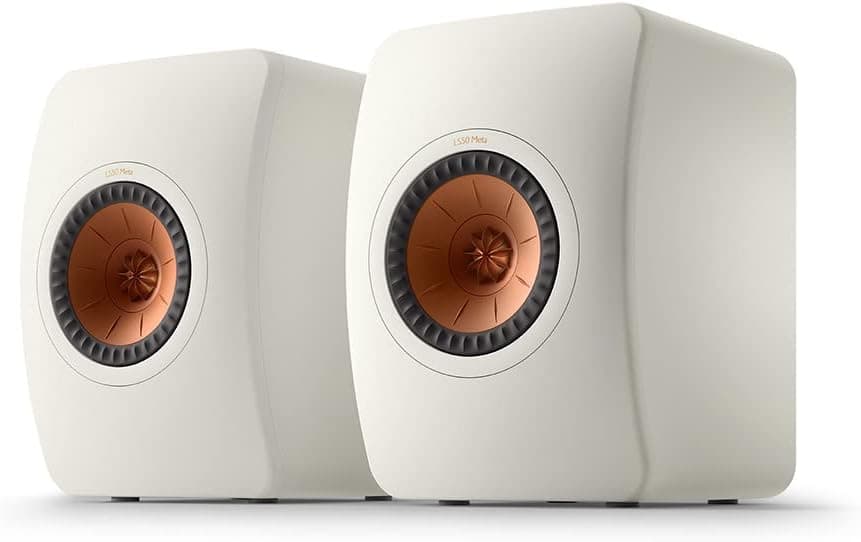
KEF LS50 Meta

Reference-grade Uni-Q drivers and Metamaterial Absorption Technology. Holographic imaging in any room.

Buy on Amazon
Denon AVC-X3800H AV receiver
AV Receiver£1,599

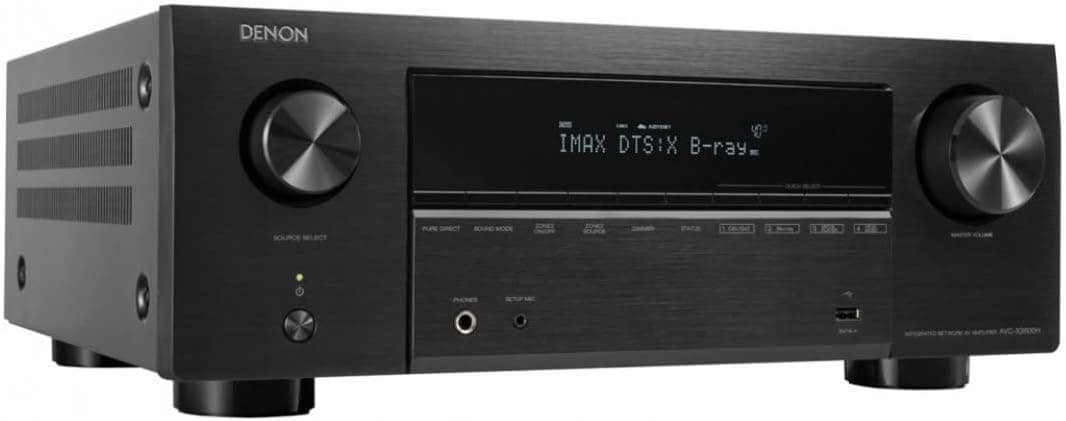
Denon AVC-X3800H

9.4-channel, 8K-ready, Dirac Live capable. The brain of a serious home cinema.

Buy on Amazon
Sennheiser HD 800 S reference headphones
Reference Headphones£1,499

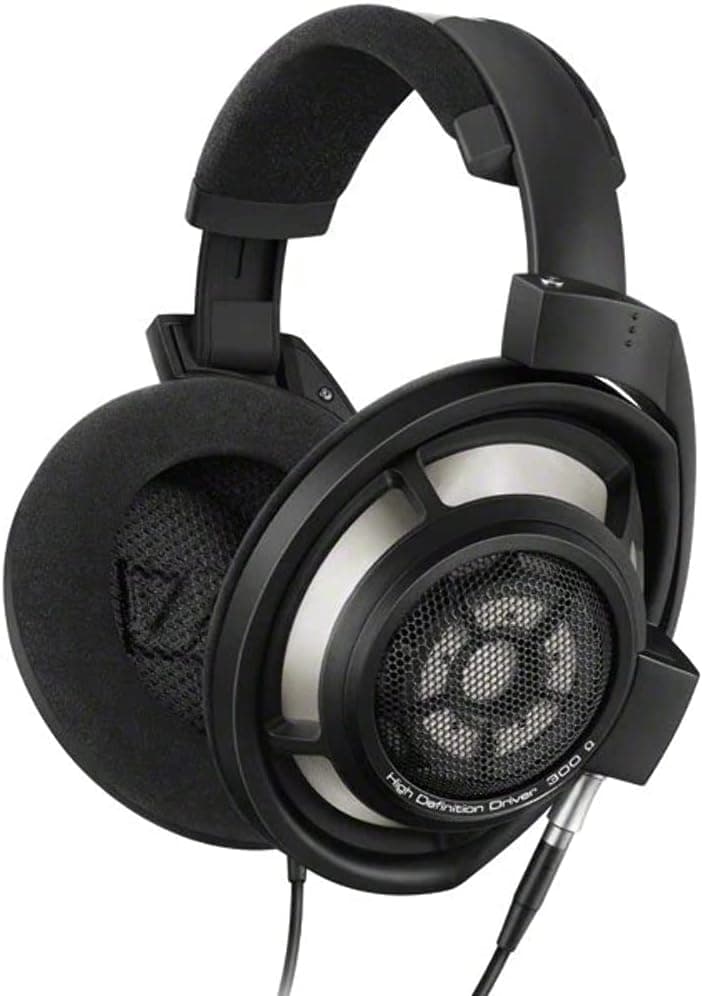
Sennheiser HD 800 S

The audiophile's measuring stick. Vast soundstage, surgical resolution, devastating honesty.

Buy on Amazon
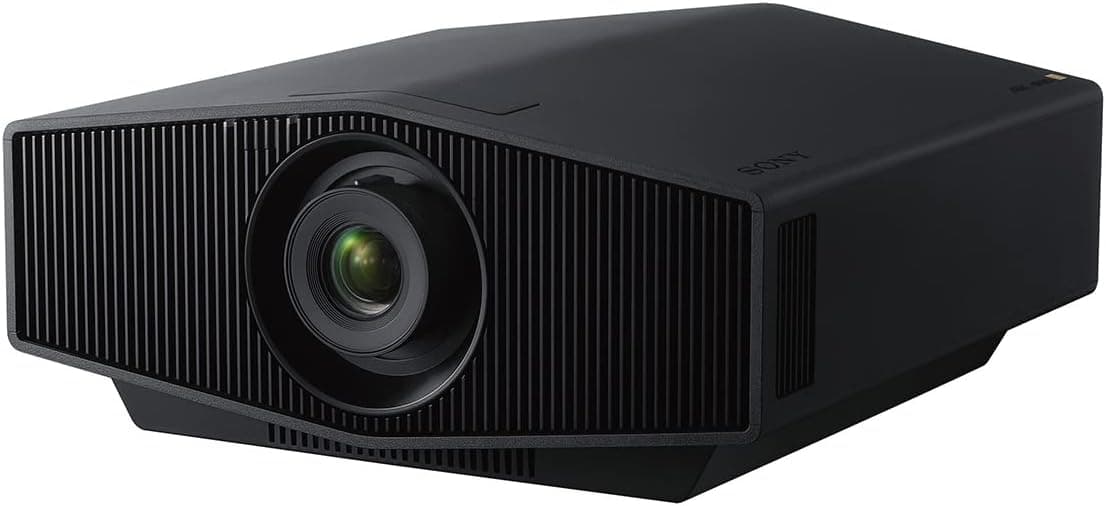
Sony VPL-XW5000ES native 4K SXRD laser projector
4K Laser Projector£5,499

Sony VPL-XW5000ES

Native 4K SXRD with a Z-Phosphor laser engine. Dynamic HDR tone-mapping, dead-silent operation.

Buy on Amazon
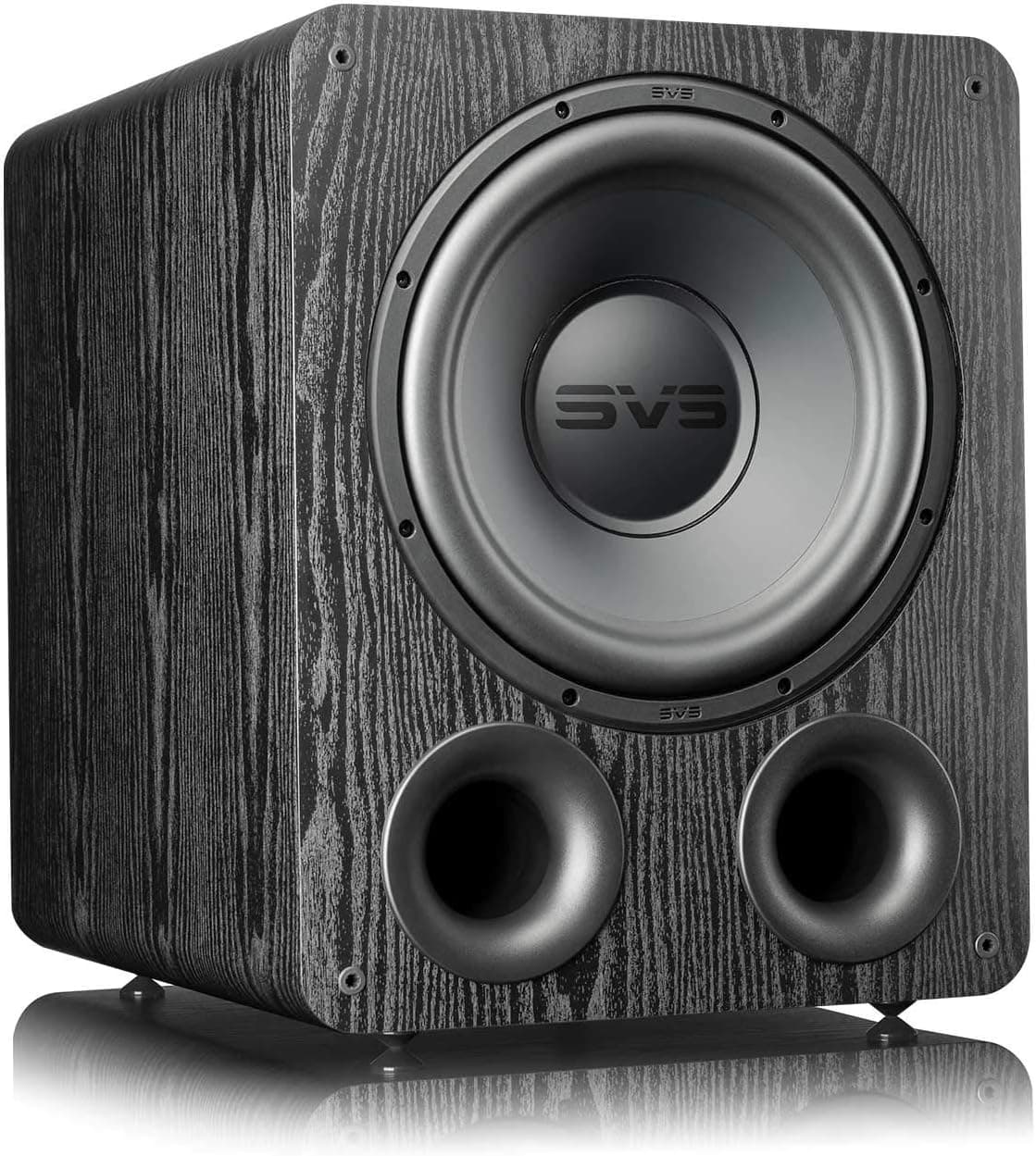
SVS PB-1000 Pro ported subwoofer
Subwoofer£799

SVS PB-1000 Pro

Sealed precision in ported clothing. Down to 17Hz with app-tuned room correction.

Buy on Amazon
03 / Reviews

Heard properly.
Then written up.

Thirty-eight products across five categories, reviewed in plain English by Darren Smith — a working sound engineer. No padding, no paid placements, no softened verdicts.

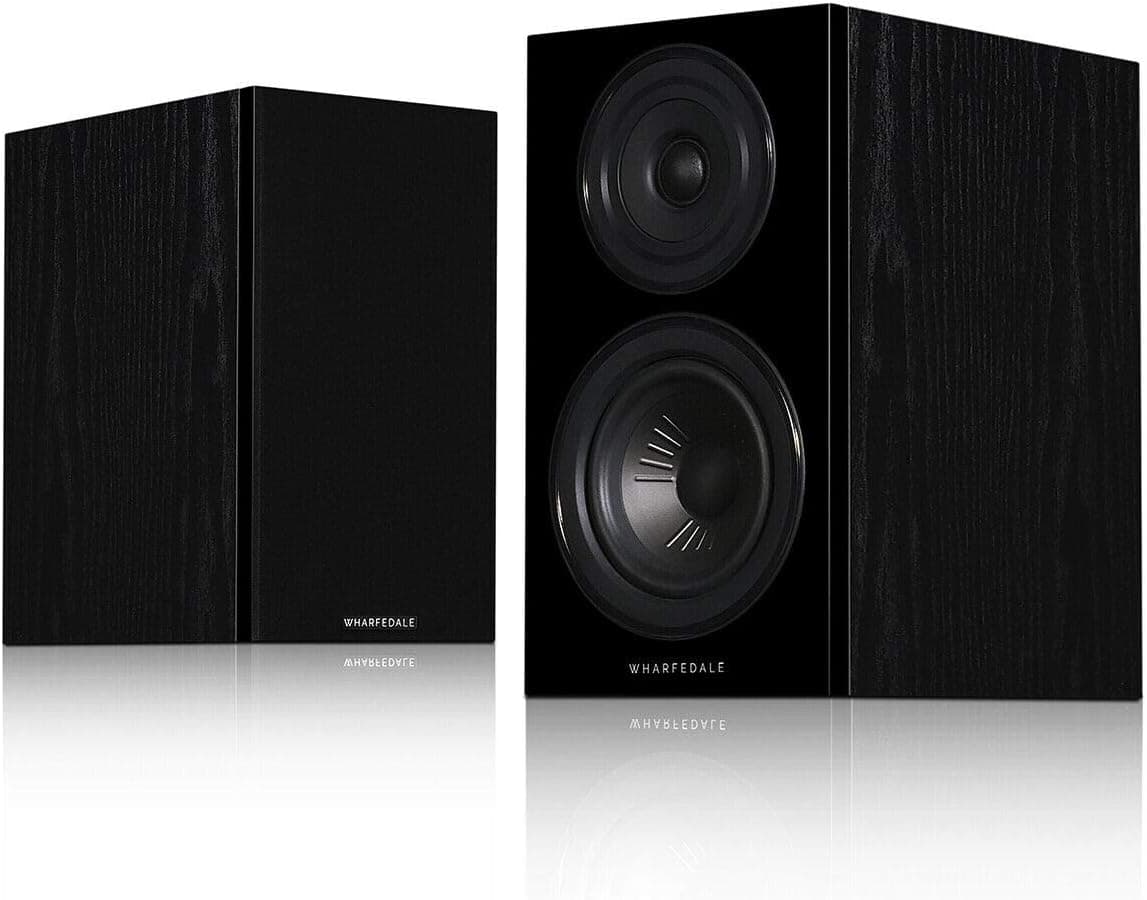
Wharfedale Diamond 12.1 bookshelf speakers
Wharfedale · Entry · Bookshelf£249

Diamond 12.1

4.0 / 5

The Diamond range has been the go-to budget audiophile pick for two decades, and the 12.1 keeps the streak alive.

The Diamond series has been Wharfedale's calling card since the 1980s, and the 12.1 doesn't break the pattern. For under £250 you get a properly tuned bookshelf with a 5‑inch woven Kevlar mid-bass and a 25mm soft dome tweeter — nothing exotic, but executed with the kind of restraint you don't usually find at this price.

Tonally it's warm-leaning. The mid-bass has actual body, which is rare in budget bookshelves that often go thin to dodge boom problems. The treble is polite to a fault — you'll never call it harsh, but on cymbals it loses some of the air you'd hear from Q Acoustics or KEF further up the ladder.

Soundstage is decent for the money — modestly wide, image stability is good, depth is limited. They want a small-to-medium room, a bit of toe-in, and a smooth-sounding amp. 65W into 8Ω is the sweet spot — they're easy to drive at 89dB sensitivity.

For a first proper hi-fi pair or a desktop near-field, you can't fault them. Don't ask them to fill a 30m² lounge.
Reviewed by Darren Smith
Updated 26 April 2026
Q Acoustics 3030i bookshelf speakers
Q Acoustics · Entry · Bookshelf£449

3030i

4.5 / 5

The most credible sub-£500 bookshelf on the market — and not by a small margin.

Q Acoustics have spent the last decade quietly building one of the best price-to-performance ladders in audio, and the 3030i is the one that punches hardest above its weight. It's a stand-mount with a 165mm mid-bass — bigger than the 3020i — and that extra cone area is what unlocks the bottom end.

What you actually hear: a tonal balance that's neutral verging on slightly warm, a mid-range that doesn't shout, and a treble that's clean without being fizzy. The cabinet is properly braced — knock it and you get a dull thud, not a chime — which matters more at this price than people think. Cabinet talk is what kills cheap speakers.

Where it earns its place is dynamic range. Bass kicks have actual snap, not the soft-edged wallow you get from some budget designs. They handle Atmos surround duty surprisingly well too — clean off-axis response means dialogue stays anchored when you're not in the centre seat.

6Ω nominal, 88dB sensitivity, 25–75W recommended. Anything from a Marantz PM6007 to a Cambridge CXA61 will drive them properly. Pair them with stands that actually couple — speakers this good deserve more than a bookshelf.

Reviewed by Darren Smith
Updated 26 April 2026
KEF Q3 Meta bookshelf speakers
KEF · Entry · Bookshelf£649

Q3 Meta

4.5 / 5

KEF's MAT tech in the Q-series chassis — most of what makes the LS50 Meta special, at half the price.

The Q3 Meta is the second-from-top of KEF's refreshed Q-series and the one that punches hardest at its price. It's a 165mm two-way bookshelf with the same Uni-Q driver topology as the LS50 Meta — concentric tweeter inside the mid-bass cone — and KEF's Metamaterial Absorption Technology behind the dome.

What MAT does in practice is absorb the rear wave from the tweeter that conventional designs leave to bounce inside the cabinet. The audible result: cleaner upper-mid decays, less smear in vocal sibilance, and a treble that resolves without the hard edge you sometimes get from cheaper aluminium-dome designs.

Tonally these are slightly polite — neutral with a touch of warmth, more forgiving than the LS50 Meta on bright recordings. Soundstage is wide and locked, courtesy of the point-source Uni-Q. Bass extends to about 58Hz in-room — fine for music in a small-to-medium room; you'll want a sub for film.

8Ω nominal, 87dB sensitivity, 15–120W recommended. Easy to drive — a Marantz PM6007 or Cambridge CXA61 has them sounding properly resolved. Don't bother with anything under 50W if you want them to come alive.

The bookshelf to buy when LS50 Meta money is more than you want to spend but you still want KEF's signature imaging.

Reviewed by Darren Smith
Updated 26 April 2026
KEF LS50 Meta bookshelf speakers
KEF · Mid · Bookshelf£1,524

LS50 Meta

5.0 / 5

Still the reference compact monitor — and the bar for everything below £2k.

The LS50 Meta is one of those speakers that genuinely earns the hype. KEF's Uni-Q driver — concentric tweeter inside the mid-bass cone — gives you a single point-source per channel, which means imaging that's locked tight and consistent off-axis. The "Meta" in the name is the Metamaterial Absorption Technology, an absorber behind the tweeter that kills 99% of the rear wave. You can hear it: less smear in the upper mids, cleaner decays, treble that resolves without ringing.

What the spec sheet doesn't tell you is how good they sound at moderate listening levels. A lot of high-end speakers come alive only when you push them; the LS50 Meta has that quality you usually pay £5k+ for — they're expressive at quiet listening levels too, which matters far more than peak SPL for most people.

The trade-offs are real. KEF rates them 8Ω nominal but they dip closer to 3.5Ω in the bass; sensitivity is 85dB. That's amplifier-hungry. Plan on something with a stable 4Ω rating and 80W+ — Hegel, Naim, NAD Master series. The bottom end is honest down to about 47Hz; below that, you're crossing to a sub.

The benchmark — and the speaker most cheaper bookshelves are quietly trying to be.

Reviewed by Darren Smith
Updated 26 April 2026
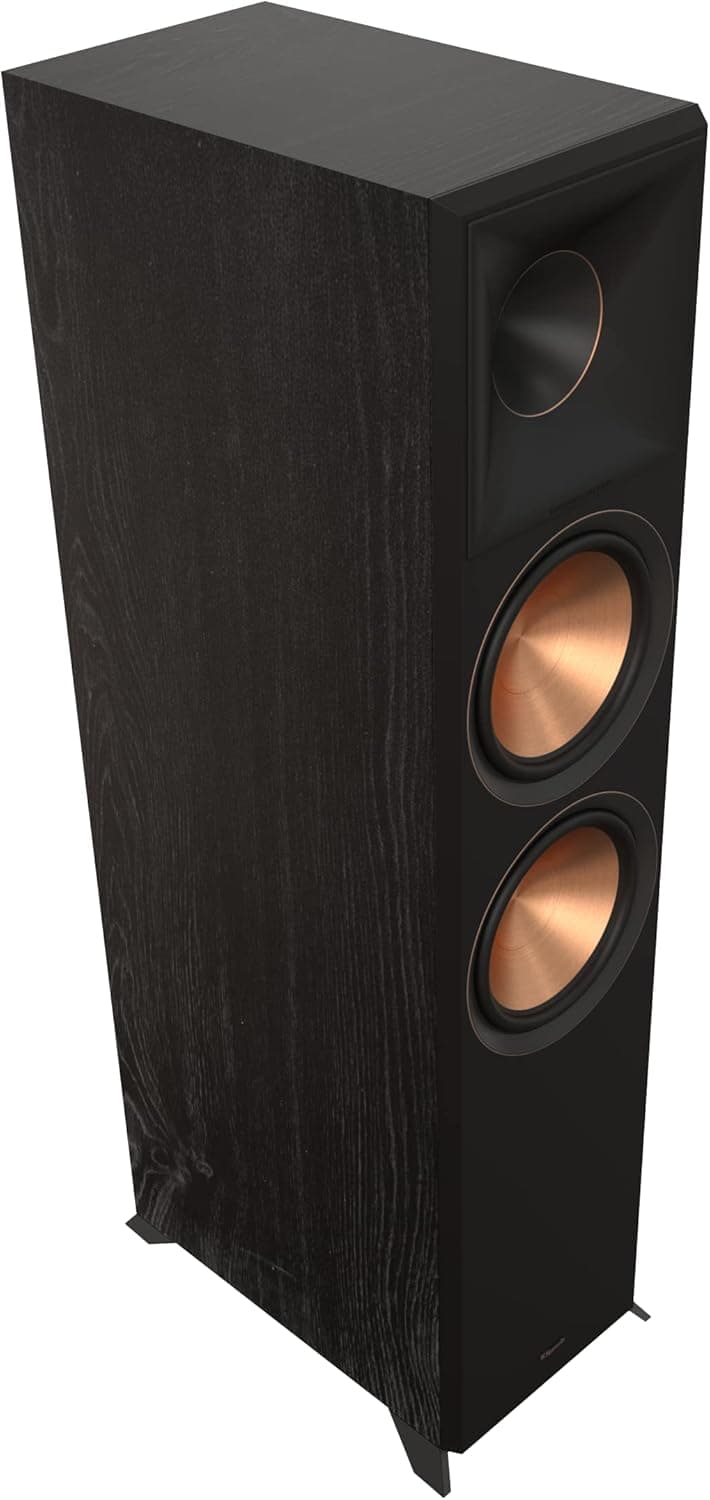
Klipsch Reference Premiere RP-8000F II floorstanding speakers
Klipsch · Mid · Floorstander£1,636

RP-8000F II

4.0 / 5

Horn-loaded Klipsch Reference Premiere at its most refined — V-shaped, dynamic, and unapologetic.

The RP-8000F II is Klipsch's mid-tier Reference Premiere floorstander and the one most likely to provoke an opinion from anyone listening. Twin 8" Cerametallic woofers, a 1" Titanium LTS tweeter loaded into Klipsch's Tractrix horn — this is the classic Klipsch formula refined for the second-generation RP line.

Tonally these are V-shaped: emphasised lower mids, cooled-down upper mids, lifted treble. That's the signature — dynamic, percussive, properly impactful on rock and film. They're not neutral; what's on the recording is interpreted, not transcribed. For audiophiles raised on B&W or KEF voicing, they'll sound forward; for anyone who grew up on Klipsch, they sound right.

Where they earn their place is dynamic capability. 98dB sensitivity is genuinely class-leading — these will hit reference volume on a 50W AVR without breaking a sweat, which makes them ideal for big rooms or anyone running a modest receiver. The horn-loaded tweeter has the projection that makes dialogue cut through in a busy mix.

8Ω nominal, 98dB sensitivity. Easy partner for any AVR. Pair with a smooth source and amp — anything aggressive will compound the V-shape unpleasantly.

Not for purists. Excellent for anyone who wants their cinema to feel like cinema.

Reviewed by Darren Smith
Updated 26 April 2026
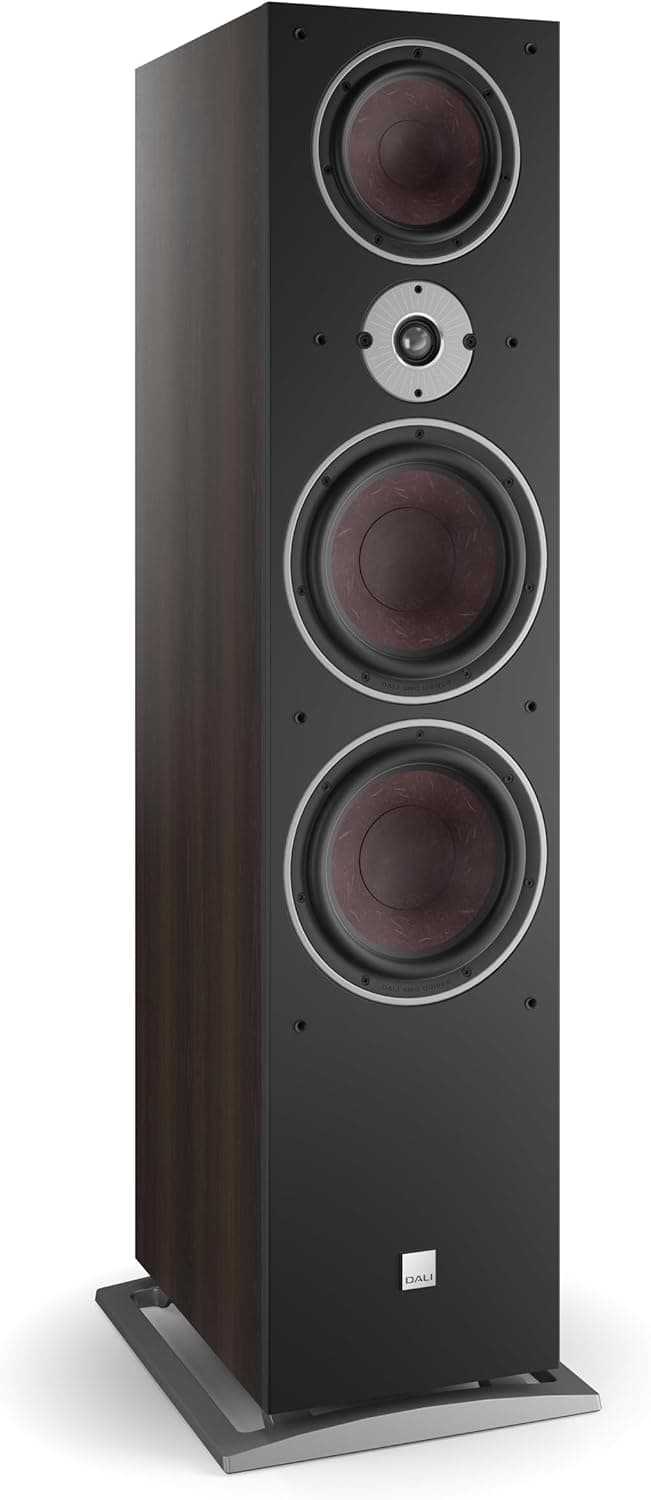
Dali Oberon 9 floorstanding speakers
Dali · Mid · Floorstander£1,499

Oberon 9

4.5 / 5

Dali's biggest Oberon — warm, musical, and bigger-sounding than the price suggests.

The Oberon 9 is the largest model in Dali's mid-range Oberon line and a genuine value-floorstander at the price. Two 9" SMC (Soft Magnetic Compound) woofers, a 29mm soft dome tweeter, and a slim cabinet — Dali's house formula at scale.

The headline tech is SMC, Dali's proprietary woofer cone material. It's denser and lower-distortion than typical paper or aluminium cones, and you hear it in a mid-range that's smoother than most £1,500 floorstanders. Tonally these are warm-leaning — slightly recessed in the upper mids, full in the bass, generous in the lower mid-range. That's Dali's house sound. For acoustic music, jazz, classical, and laid-back rock, they're brilliant. For aggressive electronic music, they can sound a touch slow.

Sensitivity is 90dB into a friendly 6Ω nominal load — easy to drive, happy with a modest AVR. The dual 9" woofers move enough air for a properly large room without needing a sub for music. For films, a sub still helps below 35Hz.

The Oberon 9 won't be the most analytical speaker you can buy at this price — but for "I just want to listen to music in my living room," it's the easiest recommendation in the category.

Reviewed by Darren Smith
Updated 26 April 2026
KEF R3 Meta premium bookshelf speakers
KEF · High-end · Bookshelf£1,999

R3 Meta

4.5 / 5

The premium bookshelf KEF builds when there's no compromise on the cabinet — full-size Uni-Q, full-size cone, full-size sound.

The R3 Meta is the largest standmount in KEF's R-series and the bridge between the LS50 Meta and the floorstanders. Same MAT-equipped Uni-Q driver as the rest of the R range, plus a 6.5" hybrid-aluminium bass driver in a much larger cabinet than the LS50.

The size matters. The bigger cabinet and the dedicated mid-bass driver give the R3 Meta something the LS50 Meta can't quite produce — proper mid-bass authority. Where LS50 Meta starts rolling off below 50Hz, the R3 stays solid down to about 38Hz in-room. For music that lives in the lower-mid register — kick drums, bass guitar, double bass — the R3 has body the smaller speaker simply can't deliver.

Imaging stays locked thanks to the Uni-Q point source — same disappearing-act trick as the LS50 Meta, scaled up. Cabinet finish is the visible upgrade: matte gloss with proper veneer, not the slightly basic finish on the Q-series.

4Ω nominal, dips to about 3.2Ω; 87dB sensitivity. Wants a 4Ω-stable amp with proper headroom — 100W into 8Ω minimum, more for big rooms. Hegel, Naim, NAD M-series all work. Don't pair them with a budget AVR — you won't hear what they can do.

The standmount you buy when LS50 Meta isn't enough but a floorstander is more than you have room for.

Reviewed by Darren Smith
Updated 26 April 2026
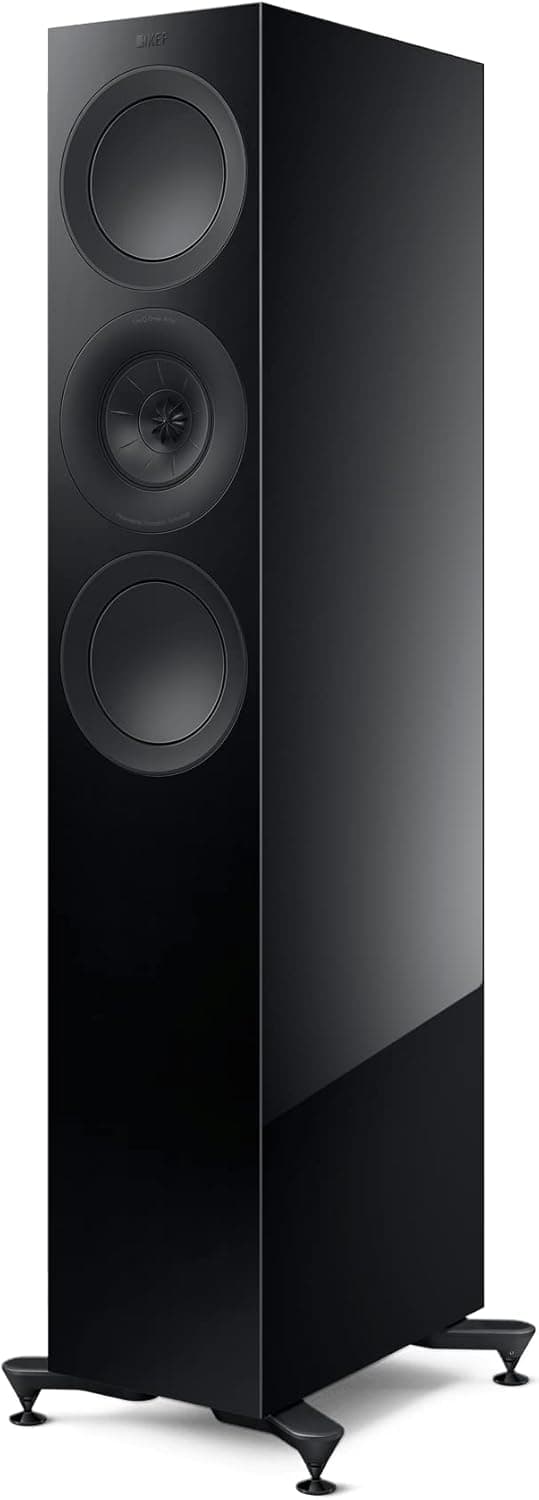
KEF R7 Meta floorstanding speakers
KEF · High-end · Floorstander£3,999

R7 Meta

4.5 / 5

Meta tech and Uni-Q point-source pulled out of the LS50 and put into a proper full-range floorstander.

The R7 Meta sits at the top of KEF's R series and is the floorstander you specify when you want LS50 Meta DNA in a full-range cabinet without paying Reference money. It's a 2.5-way design with a Uni-Q array — concentric tweeter inside the mid driver — crossed to twin 6.5" Hybrid Aluminium bass drivers in a rear-ported cabinet.

The headline tech is the same Metamaterial Absorption Technology from the LS50 Meta — an absorber behind the tweeter that kills 99% of the rear wave. It's not marketing. You hear it in upper-mid clarity that conventional designs simply can't match at this price.

Tonally these are neutral with a touch of warmth in the lower mids — easy to listen to for hours, but resolving enough that you don't lose detail at low volumes. The point-source imaging from the Uni-Q is the real party trick: image stability is rock-solid even when you stand up and walk around the room. That matters more in a real living space than in a treated audiophile cave.

Bass goes to about 32Hz in-room — full range for most music; a sub still helps for cinema. 4Ω nominal, 87dB sensitivity, recommended 50–250W. They want a proper amp — under-power them and the bass goes flabby. Give them 150W of clean Class A/B and they handle anything.

The floorstander to buy when the LS50 Meta's bottom octave isn't enough.

Reviewed by Darren Smith
Updated 26 April 2026
04 / Guides

The setup is
half the sound.

Most rooms aren't underpowered — they're untuned. Quick, honest playbooks for getting the most out of what you already own.

05 / Build Your Own

Pick the parts.
See it work — or not.

A real configurator, not a marketing form. Compatibility checks based on impedance, power, sensitivity, and use case — in plain English. No email capture. Total updates live.

Starter buildWe've started you off with a Movies build at £3,922. Change anything below to make it yours.
01 — Use case
02 — Room size
03 — Front speakers
04 — Subwooferoptional
05 — AVR / amplifier
06 — Projector / displayoptional
07 — Centre channeloptional
08 — Surround pair (×2)optional

Centre and surrounds default to a brand-matched bookshelf when available — change either if you'd rather mix brands.

Your BuildNotes
Total£3,922
  • Front speakersKEF LS50 Meta
    £1,524
  • SubwooferSVS PB-1000 Pro
    £799
  • AVRDenon AVC-X3800H
    £1,599
Notes
  • KEF LS50 Meta dips to 3.5Ω vs Denon AVC-X3800H's 4Ω rating — borderline. Should hold at sensible volumes; don't push it to reference levels.
  • Movies without surrounds is half the experience. Add a surround pair before you call the build done.
Verdict

Movie-leaning 2.1 — strong fronts and LFE, missing the surround field. Worth resolving the amber notes above before you order.

06 / About Worldray

Worldray is a guide to sound that matters. We obsess over the room, the gear, and the calibration — so the music, the films, and the games hit the way they were intended.

IndependentCuratedCalibrated
Written by

Worldray is written by Darren Smith — a working sound engineer with many years across studio mixing, live sound, and broadcast post-production, and a lifelong home cinema enthusiast.

Every product featured is chosen, heard, or evaluated through that lens. The aim is simple: real opinions on real gear, in plain English, from someone who's actually spent time with it. No paid placements. No softened verdicts. If a £15k speaker disappoints, we'll tell you. If a £249 pair surprises us, we'll tell you that too.

Got something to say? signal@worldray.com