Picking the right
subwoofer for your
room size.
The decision tree most subwoofer guides skip — cabinet, count, placement, crossover, phase, EQ, in that order. Including the corner-placement myth most readers fall for.
As an Amazon Associate, Worldray earns from qualifying purchases.
Most subwoofer buying guides give you the same three pieces of advice. Buy the biggest you can afford. More is better. Stick it in the corner. All three are wrong, or at best context-dependent — and the corner one is genuinely harmful.
Manufacturers approve corner placement because it produces maximum , and "maximum SPL" is what shifts product. But corners are also where you maximally excite the room’s modes. The result is more bass, yes — and badly uneven bass, with severe peaks at certain frequencies and equally severe at others, varying by seat. Louder is not the same as better.
The point of careful subwoofer setup is even response across every listening position you care about, not maximum loudness at one. A well-placed £799 sub will outperform a £3,000 one shoved in a corner — every time, in any room. The rest of this guide is the actual decision tree.
What you actually need to know first
Stop. Before you click "buy" on anything, work the order:
- Room size and shape — drives everything else.
- One sub or two — depends on shape and seating, not budget.
- Sealed or ported — depends on what you listen to and how big the room is.
- Placement — this is where most people lose the game.
- — set to your speaker’s natural roll-off, not the default.
- — measured, not guessed.
- — last, and only after the previous six are right.
Reverse this order at your peril. Plenty of readers buy a sub on Black Friday, drop it in the nearest corner, run the AVR’s room EQ once, and then wonder why the bass is still uneven. They didn’t buy the wrong sub. They got the order wrong.
Each step builds on the previous one. A perfect cabinet design with a £2,000 budget does nothing for you if the placement is fighting the room. EQ can fix small problems with a properly placed sub; it cannot rescue a badly placed one. We’ll come back to that — it’s the most important point in this guide that most of the audio press has wrong.
Sealed vs ported, and when each wins
Both designs have legitimate use cases. Don’t let anyone preach.
Ported cabinets reach lower for a given driver size and amplifier — typically 3–4dB more output near the bottom octave, which sounds like a lot when an explosion lands or a synth bass-drop hits. The trade-off is group delay. Ported designs ring slightly at their tuning frequency, which is what people mean when they describe a sub as "boomy" or "loose." It’s not a deal-breaker. For pure film duty in a big room where you want sub-20Hz output that you feel before you hear, ported is the right answer.
Sealed cabinets trade the bottom-octave SPL advantage for tighter group delay. Bass kicks have edges. Dialogue stays time-aligned with the screen. Music — particularly anything where a bass guitar’s articulation matters — sounds taut rather than blurred. The audible signature is "tight" rather than "huge."
For most readers — mixed-use systems doing both film and music in a normal-sized UK living room — sealed wins. The £900 SB-2000 Pro will outperform a £1,200 ported sub on integration in any room under 30m². If your use case is a 60m² basement cinema and you genuinely never play music through it, ported earns its place. Otherwise, sealed.
One sub or two?
Depends on room shape and seating layout. There is no universal answer, and anyone who tells you otherwise is either selling you a sub or hasn’t measured one.
One sub is right when: the room is small (under 15m²) and rectangular, there’s a single listening position you actually use, and the room has no major asymmetries — no archways, no alcoves, no half-walls. In this case one well-placed sub will give you smooth response at the seat. The crawl test will land you on a workable spot. Save the money on a second sub for a better single sub.
Two subs are right when: the room is larger (25m²+), you have multiple seating positions you care about, or the room is irregular — L-shape, knocked-through wall, anything that breaks rectangular symmetry.
The reason isn’t loudness, it’s evenness. A single sub will always create a fixed pattern of peaks and nulls determined by the room’s modes. A second sub at the opposite-wall midpoint can be tuned to cancel the dominant length-axis mode by 6–10dB across all seats simultaneously. You move from "one good seat and three bad ones" to "four acceptable seats." That’s the upgrade dual subs actually buy you.
Medium room, single seating layout: one sub is fine. Same room with multiple seats or an awkward shape: budget for two.
Placement: stop trusting the manual
Most subwoofer manuals tell you a corner placement is "approved." They’re not lying — corners do produce maximum SPL, because every room mode is excited at maximum amplitude in the corners. But that’s exactly the problem.
A room mode is a standing wave at a frequency where the room’s dimensions reinforce certain harmonics and cancel others. In the corner, all modes ring at their loudest. The result: a sub that hits hard at certain frequencies and disappears at others — peaks of +10dB and nulls of -15dB at the listening position aren’t unusual. More volume, worse response. Don’t put the sub in the corner just because the manual says you can.
The point of careful placement is not maximum SPL. It’s even response across every seat you care about. Two ways to find the right spot:
The crawl test
Put the sub on the listening seat. Play a 30–50Hz sweep. Walk slowly around the room on your hands and knees, listening for the spot where the bass is loudest and tightest. That’s where your sub goes. Free, takes 20 minutes, gets you 80% of the way in a regular rectangular room. It misses the null-cancellation issues that dominate irregular rooms — if your room has any major asymmetry, the crawl test will give you a confidently wrong answer.
The proper way: measurement
A miniDSP UMIK-1 calibrated USB measurement microphone (around £90) plus REW — Room EQ Wizard, free, available on every platform. Drop the mic at the seating position, play a sweep tone, examine the in-room frequency response. Move the sub. Re-measure. Iterate.
It takes 30–60 minutes. It gives you objective data instead of a hunch. It’s the closest thing to a professional calibration workflow that anyone can buy for less than a curry-night spend. If you do nothing else from this guide, do this one.
Crossover and phase: the bits most people get wrong
The 80Hz crossover default is a heuristic, not a recommendation. Your AVR sets it because it has to set something — and 80Hz is fine for typical 6.5-inch bookshelves. Most other speakers want something different.
Set crossover by your speaker’s natural roll-off:
- Small bookshelves (4–5″ mid-bass): 90–120Hz. Their drivers can’t physically reproduce much below that without distortion; cross higher than the AVR’s default.
- Standard bookshelves (6–6.5″): 80–90Hz. The default is fine here, but tweak by 5–10Hz based on measured response.
- Floorstanders: 60–80Hz, sometimes lower. A pair of properly braced floorstanders with 8″ mid-bass drivers can reach 40Hz cleanly — set the crossover to 60Hz and let the mains do their job.
Cross too low and your speaker tries to reproduce frequencies it physically can’t, which causes distortion and amp compression. Cross too high and you push vocal energy into the sub’s physical location, breaking the illusion of a single coherent stage.
Phase. Software measurement is the only proper way. Phase-by-ear works in obvious cases — front sub vs rear sub, 0° vs 180° — but it masks subtler timing offsets that cause cancellation right at the crossover frequency. REW’s measurement-then-adjust workflow: sweep at 0°, sweep at 180°, sweep at 90°, compare across the crossover band. The setting where the in-room curve is flattest at the crossover is the right one. Five minutes once you’ve got the rig set up — and if you’ve already invested in UMIK-1 + REW for placement, you’ve already done the hard part.
Room EQ: useful, but not magic
Here’s the contrarian-but-correct take. Room EQ — , , your sub’s own app correction — is overrated relative to placement.
EQ can reduce a peak. It cannot fill a null. A null happens when two waves arrive at your seat 180° out of phase and cancel each other. The signal isn’t there. You can boost the EQ band by +12dB, +18dB, +30dB — the wave is still being cancelled, and all you’ve done is heat the amplifier and clip on transients.
What EQ can do: smooth out residual ±2–3dB peaks left after good placement, tighten up time alignment, fine-tune the crossover transition. These are real benefits with a properly placed sub.
What EQ can’t do: fix a sub stuck in a corner. Fix a single sub fighting the room’s strongest mode. Make a £400 sub sound like a £2,000 one. Save you from skipping the placement work. The audio press tends to oversell EQ because "spend more on EQ" makes for cleaner marketing copy than "spend an afternoon measuring." Use EQ. Just use it last, and don’t expect it to do work that placement should have done. If your in-room response is ±8dB before EQ, no EQ will fix that. Move the sub.
What to actually buy
Real recommendations from the catalogue, sorted by room size. Each is a sub I’d put in the matching room without hesitation. Justifications below; full reviews linked from the cards.
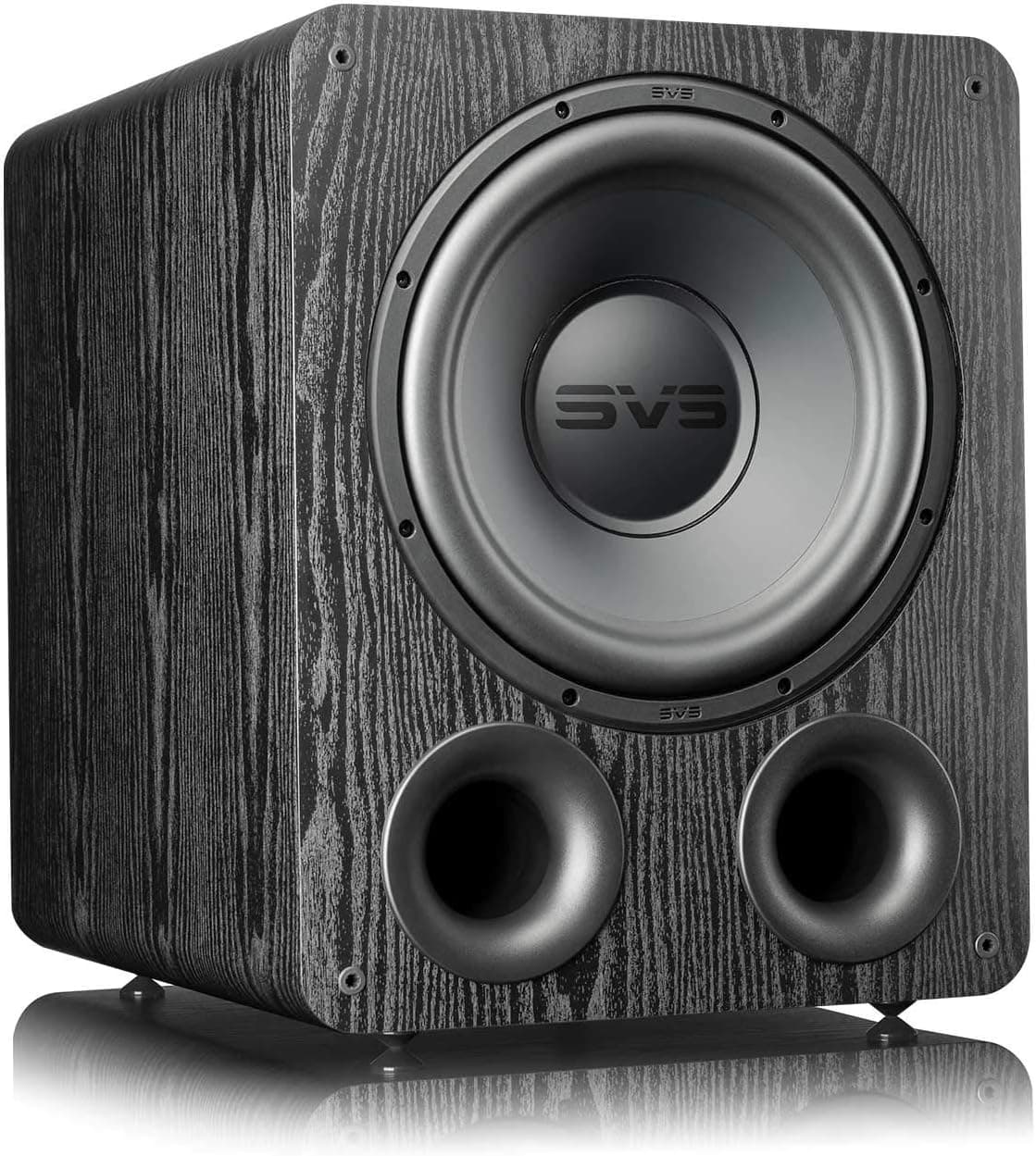
SVS PB-1000 Pro
Ported, 12″ driver, 325W RMS. Yes, ported in the section after I argued for sealed — at this price tier the SVS bottom-octave advantage matters more than the slight group-delay penalty in a small room you’ll mostly fill with music or modest film duty. Sealed alternatives at £800-and-under compromise too much output for the saving.
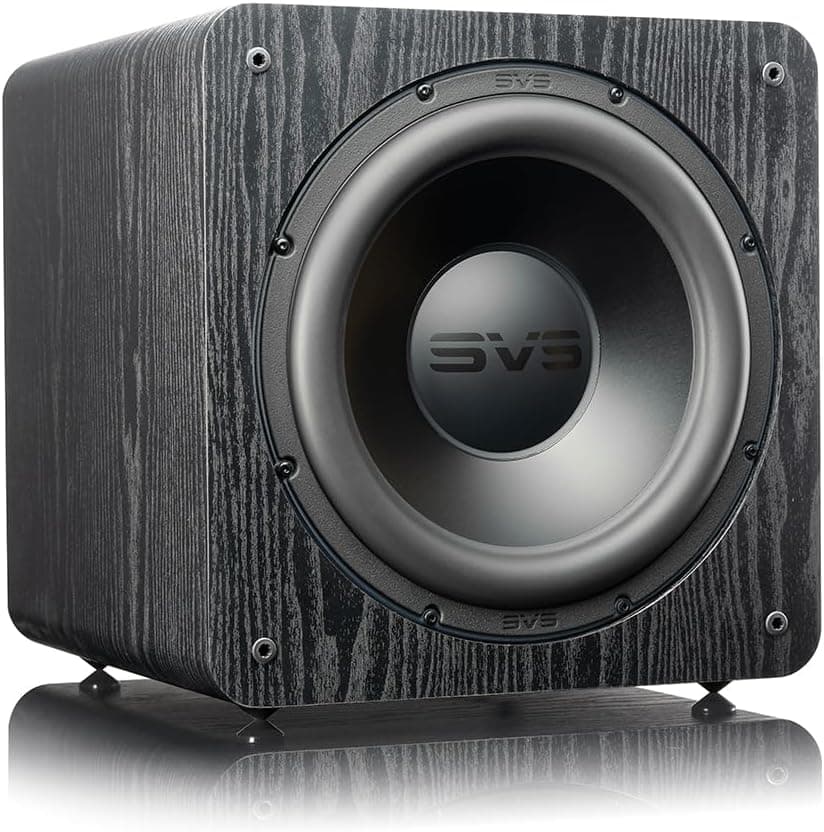
SVS SB-2000 Pro
Sealed, app-controlled, parametric EQ on board, 550W peak. The technical-best option for mixed-use systems in a normal living-room. The SB-2000 Pro is the sub that justifies its sealed-cabinet group-delay claim on every kick drum and dialogue line you throw at it.
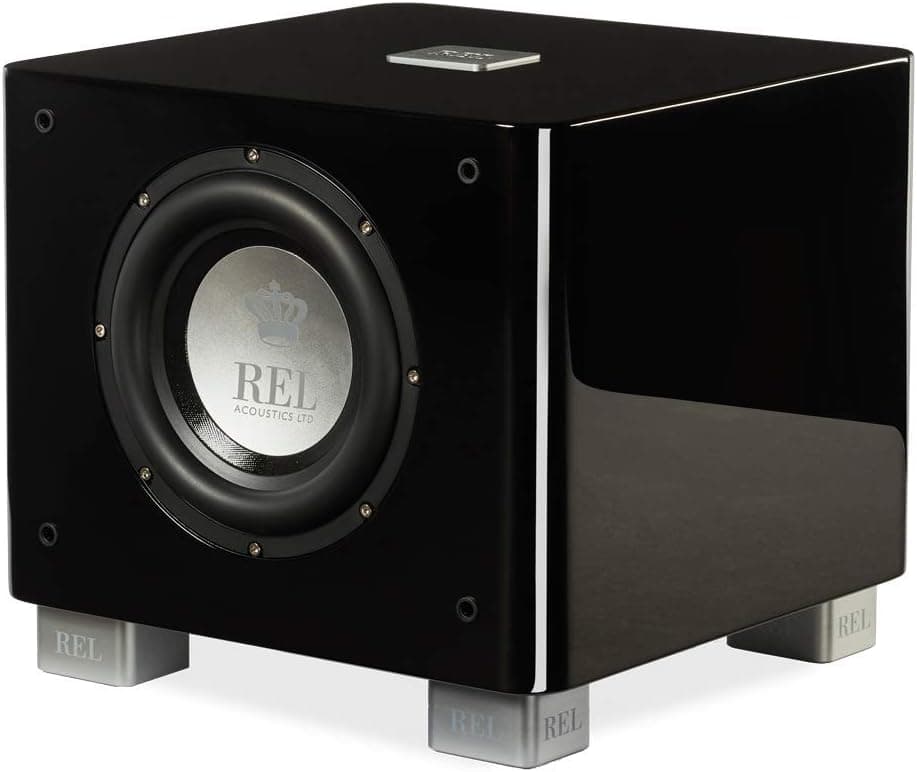
REL T/7x
Sealed, 8″ driver, 200W. Trades raw output for the REL house tuning — slightly warmer, more "musical" character. If your system sits closer to a stereo pair than a 5.1, T/7x integrates with floorstanders better than any SVS at this price. If the system tilts toward film, take the SB-2000 Pro instead.
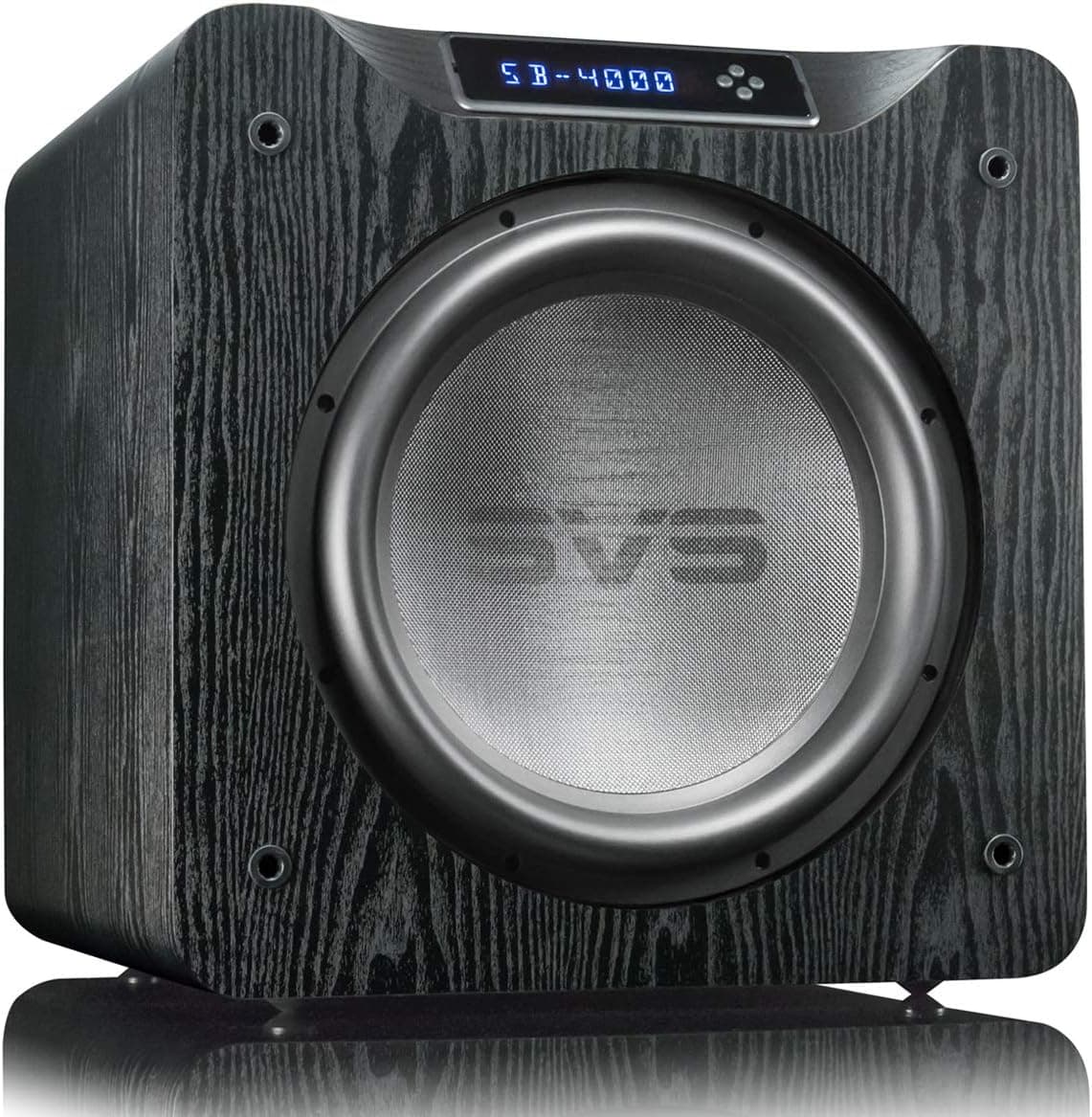
SVS SB-4000
Sealed, 13.5″ driver, 1,200W RMS / 4,000W peak. The cinema sub the rest of the SVS range steps down from. For properly sized rooms you want the headroom — a 12″ sub will reach reference SPL but with audible compression on demand-of-the-decade scenes. SB-4000 doesn’t.
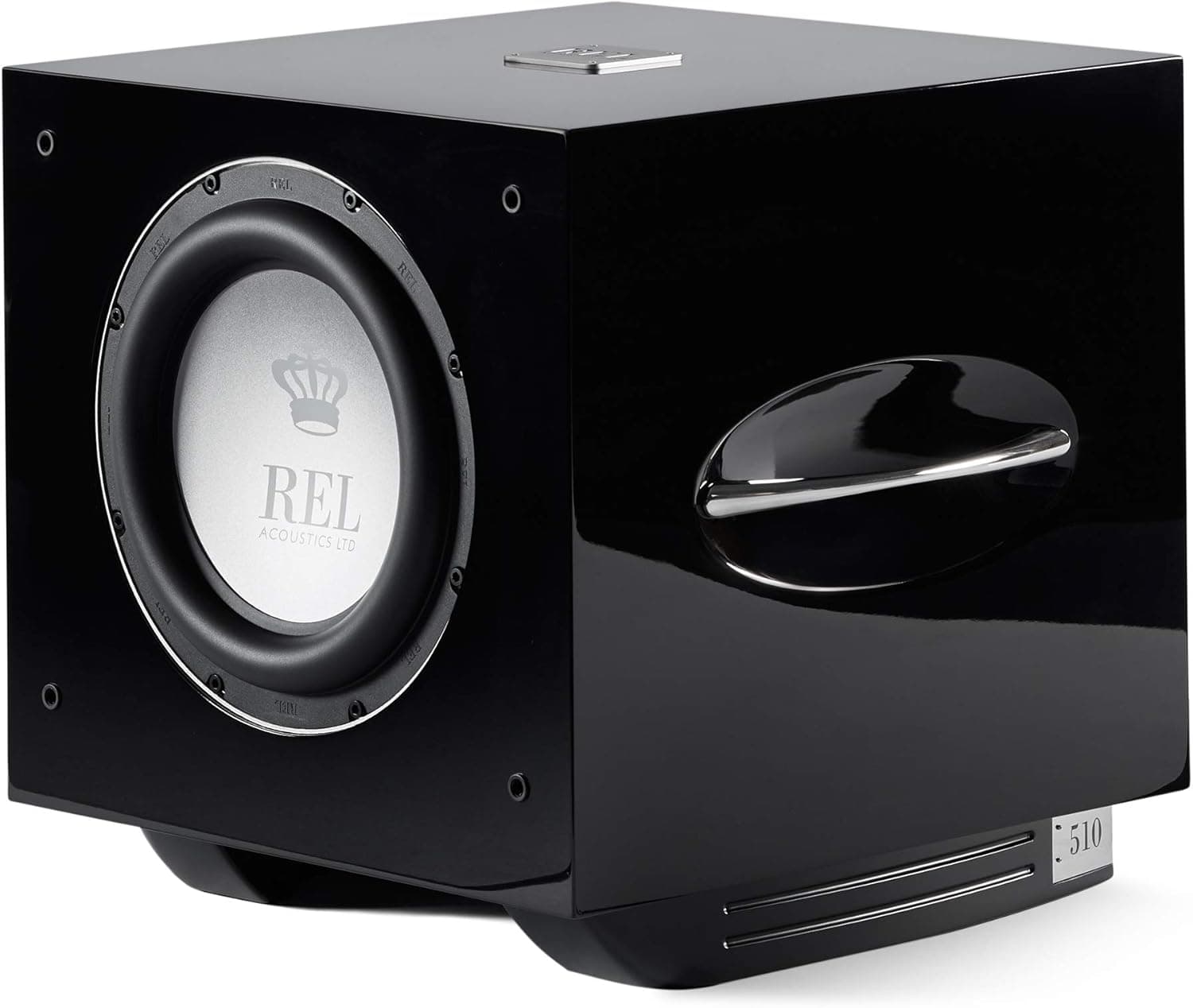
REL S/510
Sealed, 10″ front-firing plus 10″ downward-firing , 500W. Slightly less raw SPL than the SB-4000 but noticeably better integration with floorstanders. The S/510 is the sub for systems where stereo music is the primary use and film is a secondary benefit.
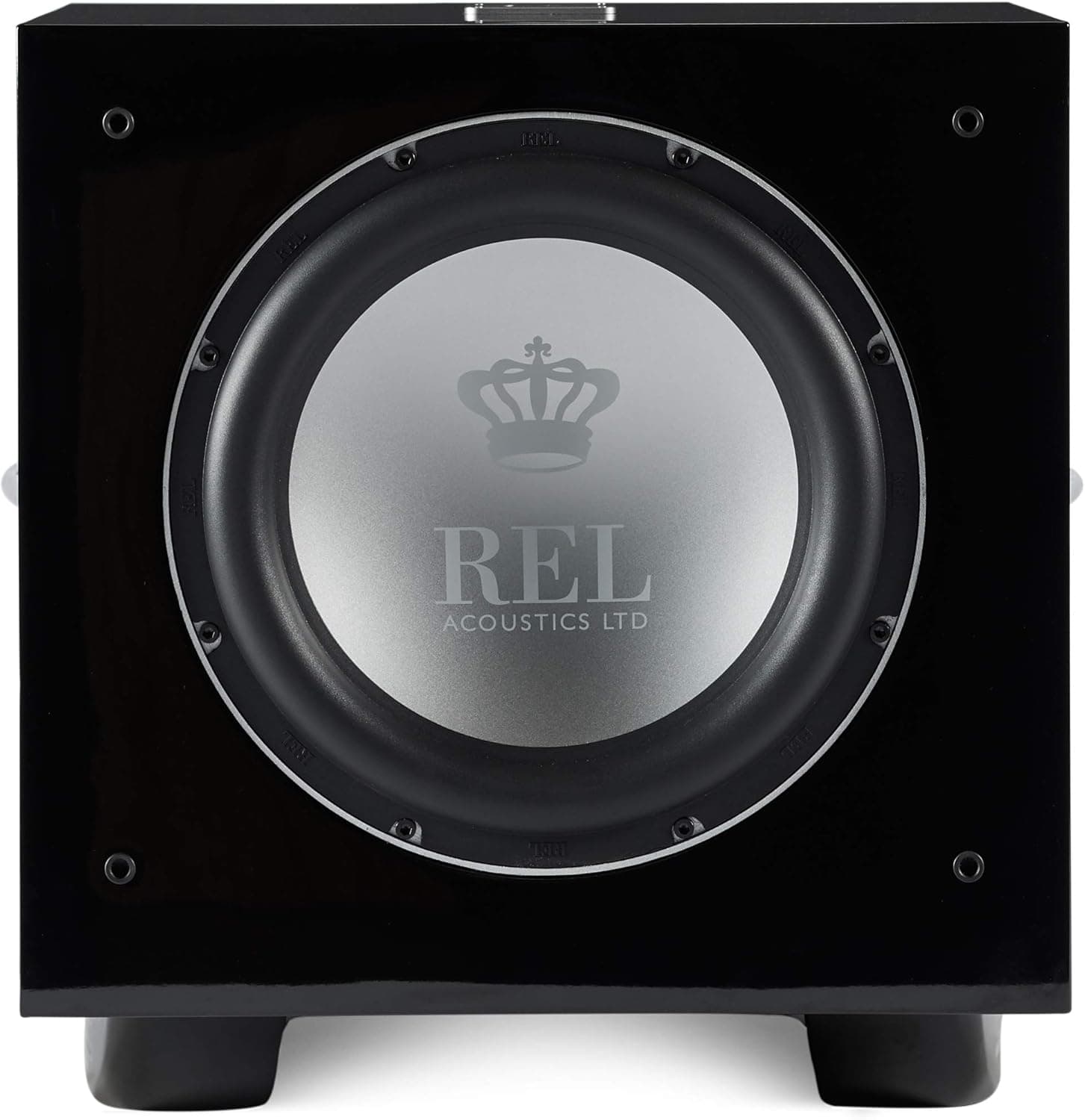
REL S/812
REL’s flagship S-series. 12″ front-firing plus 12″ downward-firing passive radiator, 1,000W. The natural ceiling of the catalogue at the time of writing — the discontinued SVS PB17-Ultra would be the alternative if you can find one, but not on Amazon UK. For genuinely big rooms, deploy two.
Once you’ve picked a sub, see how it talks to your speakers and AVR.
The Worldray Configurator lets you spec the whole system and see compatibility warnings live — speaker impedance vs AVR amp section, sub channel routing, tier mismatches, and use-case gaps. Drop in your sub, your speakers, and your AVR, and it’ll tell you within five seconds whether the build is coherent.